
The Stress-Free Guide to Trimming Your Cat’s Nails at Home
January 9, 2026 10:13 pmTrimming a cat’s nails can feel like an impossible task, especially when you’re worried about getting scratched or stressed out in the process. If you’re a cat parent, you probably already know how much your feline friend values their independence and personal space. Combine that with a pair of nail clippers, and you might find yourself facing a tiny tornado of fur and claws. However, with the right techniques and a calm environment, learning how to trim cat nails without getting scratched is entirely doable at home. This guide will walk you through everything you need to know to keep your cat’s claws in check and your bond with them intact.
Understanding Your Cat’s Claws and Their Importance
Before picking up the nail clippers, it’s essential to understand the role claws play in your cat’s life. Cats use their claws for climbing, hunting, self-defense, and even stretching. Their claws also help them mark territory, as scent glands in their paws leave behind identifying information. Because of this, many cats are protective of their paws and wary of anyone touching them.
Cats’ claws grow continuously and are retractable, which means they stay sharp unless naturally worn down by scratching posts or outdoor activity. Indoor cats, in particular, may not wear down their nails fast enough, leading to overly long or sharp claws. Left unchecked, these can curl into the paw pad or snag on fabrics, causing pain or injury.
Regular nail trims help prevent damage to furniture, accidental scratches during play, and discomfort for your cat. The key is making the experience positive and routine, not a dreaded struggle.
Preparing for a Safe and Calm Trimming Session
Setting the stage is one of the most important parts of a stress-free trim. You will need cat-specific nail clippers, which are designed to handle small claws and prevent splintering. Human nail clippers may crush the nail rather than cut it cleanly. Choose a time when your cat is naturally calm, such as after a meal or play session.
Choose a quiet, well-lit room without distractions. If your cat is used to being brushed or held, incorporate those familiar routines to ease them into the experience. Talk to your cat in a soothing voice and use gentle petting to create a calm mood. It’s also a good idea to trim your cat’s nails when they are a little sleepy or relaxed, like after waking from a nap.
Place your cat in your lap or on a stable surface. If your cat is especially fidgety, you may want to wrap them gently in a towel, leaving only one paw exposed at a time. This technique, often called the “kitty burrito,” helps your cat feel secure while minimizing movement.
How to Trim Cat Nails Without Getting Scratched
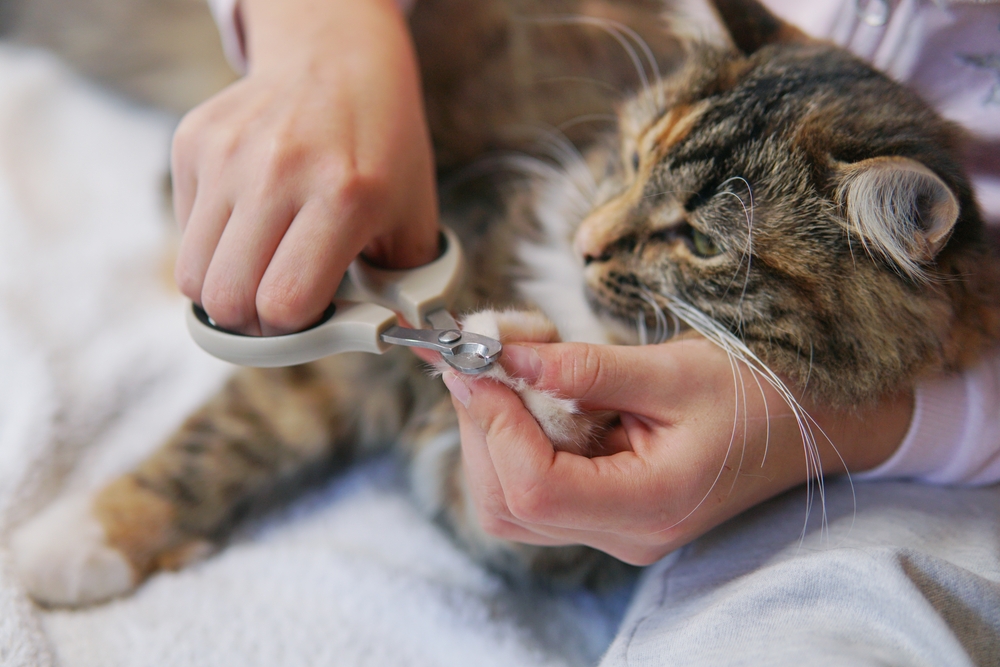
Once your cat is calm and situated, gently take one of their paws in your hand. Press softly on the top and bottom of the paw to extend the claws. You will notice a translucent area near the tip and a pinkish section closer to the base of the claw, known as the quick. Avoid cutting into the quick, as it contains nerves and blood vessels and will cause pain and bleeding if nicked.
Your goal is to trim only the sharp tip of the claw, about one to two millimeters away from the quick. Make small cuts and release the paw after each one to avoid overwhelming your cat. If your cat pulls away or becomes agitated, pause and offer treats or verbal reassurance. Patience is essential. You might only get through a few nails in one sitting, and that’s perfectly fine.
In case you accidentally cut the quick, have styptic powder or cornstarch nearby to stop any bleeding. While this mistake can be unsettling, it’s not serious and can be quickly remedied. Take it as a learning experience and be more conservative with future trims.
If your cat becomes aggressive or highly stressed despite your best efforts, do not force the process. Consider trimming only one paw per day, or seek help from a professional groomer or veterinarian.
Creating Positive Associations and Routine
One of the most effective ways to make trimming a natural part of your cat’s life is by creating positive associations with the process. Praise your cat verbally, give gentle petting, and offer treats both during and after each session. This rewards cooperation and helps your cat associate nail trimming with good experiences rather than stress.
Try incorporating paw-handling into your daily routine, even when you are not trimming nails. Touch and hold your cat’s paws gently during play or cuddle time to build trust and desensitize them to having their feet touched.
Consistency is also crucial. Trim your cat’s nails every two to four weeks depending on their activity level. Younger and more active cats may require less frequent trimming, while older or indoor-only cats may need it more often. Frequent trims mean fewer nails to clip each time, reducing stress for both of you.
Stay calm throughout the process. Cats are extremely sensitive to your energy. If you’re nervous or tense, they will be too. Treat each trimming session as routine rather than an ordeal, and your cat will gradually learn to follow your lead.
Tools, Timing, and Knowing When to Ask for Help
Investing in the right tools can make all the difference. Look for scissor-style or guillotine-style clippers specifically made for cats. Some even come with safety guards to help prevent over-trimming. Keep the clippers sharp and clean to ensure smooth cuts and avoid splintering.
If you have a kitten, begin handling their paws early and introduce the clippers gradually. Touch their feet regularly and give treats after each touch, even before you begin trimming. The earlier you start, the easier it will be as they grow.
Older cats may take longer to adjust. Be patient and take small steps. If your cat has had negative experiences in the past, it may take time to rebuild their trust. Never yell or punish your cat for resisting. Instead, end the session on a positive note, even if you didn’t trim every nail.
Sometimes, trimming your cat’s nails at home may simply not be feasible. In cases where your cat becomes aggressive, extremely anxious, or if you feel uncomfortable handling clippers, don’t hesitate to seek professional help. Many groomers and veterinary clinics offer nail trimming services and can perform the task quickly and safely.
Conclusion
Learning how to trim cat nails without getting scratched is more than just a grooming task; it’s an opportunity to build trust and comfort between you and your feline companion. With preparation, patience, and the right technique, you can turn what might seem like a stressful chore into a manageable part of your cat care routine.
Understanding your cat’s behavior, using the proper tools, and practicing gentle handling are all essential elements of a successful trim. Every cat is different, and what works for one might not work for another. Take your time, celebrate small wins, and always prioritize your cat’s well-being.
Over time, you and your cat can develop a rhythm that makes nail trimming a calm and even bonding experience. Whether you do it one paw at a time or in a single session, every step forward is a sign of progress. With consistency and care, you’ll be well on your way to keeping your cat comfortable, your furniture safe, and your hands scratch-free.
Need a Cat Veterinarian in Alexandria, VA?
Welcome to Kingstowne Cat Clinic! Kingstowne Cat Clinic is a locally owned, community focused cat clinic. We specialize in giving your feline friend the care they need. We offer wellness exams, surgery, dentistry, vaccinations, and acupuncture. We also provide sedated grooming and at home euthanasia. Kingstowne Cat Clinic is dedicated to providing quality medical and surgical care for all cats. Contact us today for an appointment!
Categorised in: Cat Tips
This post was written by admin